

Hearing the Language
The story that builds a dwelling

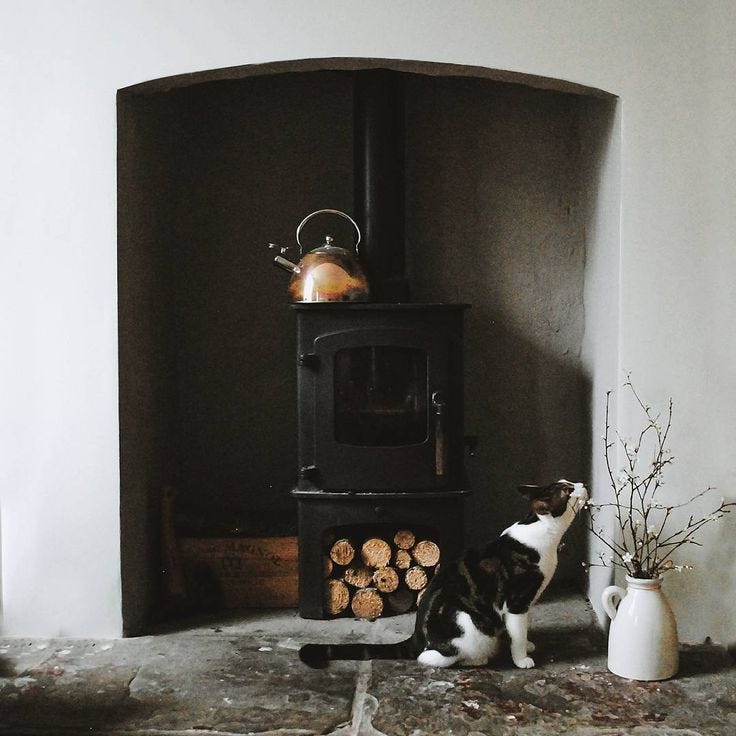
Yes, there are walls, framed and finished. There’s a ceiling, there are floors. There’s a series of outlets, lights, and switches. There’s plumbing that brings water in, and lets water out. There’s the structure itself, for better or worse, from which to begin.
But even more, at the beginning of creating a home, there’s a feeling, a story, a narrative without words woven into the space from time gone by and from time yet to come. It says where the house is, who’s been here and what they’ve done, or haven’t. It says something about you, its stewards now, who you are and where your values lie. It causes the walls to talk, the contents of the house to speak.
It’s the language of the house.
From the literal (the finite amount of space under this roof and between these walls), to the practical (how this space will be allocated, lived in, and used), to the feeling (calm, natural, simple, welcoming, restful, collected, unassuming, warm, uncluttered), to the story, the language informs, communicates, tells, and speaks.
This is where I begin. I gather the data: the measurements, the numbers, the calculations, the existing conditions. I allocate space, direct flow, provide for systems deficiencies. Over pages, I draw the plan. All while listening for this home’s guiding narrative.
Imagination infuses this plain narrow room, and I begin to hear it speak.
The fictional story goes that this ranch house is a hundred years older than it actually is. And maybe this room was the first and only room of this house to be built (until prosperity came later on), not the last, and that the homesteading people who built it needed quick shelter from the winter, too. Maybe they decided on its shape and size with a future house addition in mind, or maybe they were inspired by the smallest of dwellings in the old country - the shepherd’s hut, the gypsy wagon, the house boat, the ship’s quarters. We’ll never know. But long and narrow it is.
Maybe they placed their bed in a nook across the short wall at the far end of the room, opposite the entry door. And maybe they built a stone chimney on the long wall opposite the window, with a small fireplace inside. Maybe they made a counter from hand-planed boards and placed it beside the chimney, then skirted it with gathered homespun. Between the counter and the bed, perhaps there was a rustic wooden wardrobe, handmade by the man, with their clothing hanging inside.
On the opposite long wall, maybe they placed a small wooden dining table under the only window, with two chairs at either end. Maybe they hung candle sconces on the wall. Maybe there was a kerosene lamp sitting on the table. There were likely pegs in the wall behind the front door, and in the one available corner, perhaps there sat a rocking chair with a simple corner cupboard hanging above.
The dwelling felt simple, and, yes, even plain. But also peaceful, uncluttered, and welcoming. It felt like home.
For more inspiring fictional narratives that have driven the scope of some amazing home projects, read about Claxton House, and Dowager Inn, designed and built by Historical Concepts, and owner/interior designer Bryan Graybill. Also, French Quarter Brooklyn, and Wild Goose Farmhouse by Jessica Helgerson.
Thank you for being here! For reading, commenting, and sharing my work. Subscribing keeps my words coming to your inbox. Your paid subscriptions keep this site going. I’m happy to say that nothing here is behind a paywall, loves, so read on! Thank you!